LHCP or RHCP? Choosing polarization for FPV antennas
Why circular polarization matters for 5.8 GHz FPV video, and how to pick LHCP or RHCP for your drone and goggles.
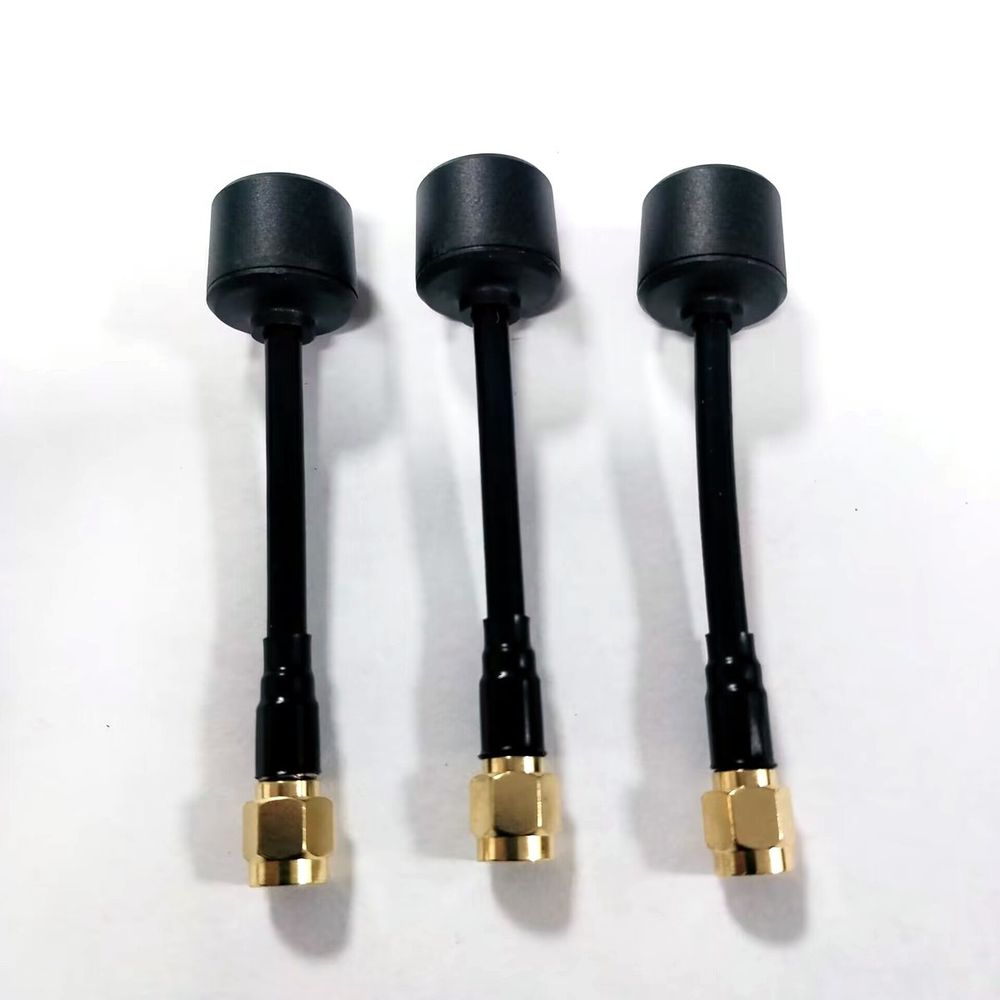
Most 5.8 GHz FPV video systems use circularly polarized antennas. The radiated field rotates as it travels, either to the left (LHCP) or to the right (RHCP).
Why circular polarization
A drone banks, flips and rolls constantly. With a linear antenna, the link drops whenever the transmitter and receiver antennas sit at right angles to each other. A circular antenna keeps working at any roll angle, and it rejects much of the signal that bounces off walls and the ground, because a reflection reverses the direction of rotation.
The one rule: match both ends
LHCP and RHCP do not mix. Put an LHCP antenna on the video transmitter and an LHCP antenna on the goggles, or RHCP on both. A mismatched pair loses a large part of the signal, which shows up as a short range and a noisy picture.
Which one should you choose?
Neither performs better on its own. Choose by what the rest of your fleet or your flying group uses:
- Racing events often assign polarization so pilots on nearby channels interfere less.
- Your existing goggles decide it for you: match what is already on them.
- OEM builds should ship one polarization across the whole product line, so spare parts always match.
Connector check
Polarization is half of the match; the connector is the other half. Video transmitters usually use SMA, while some goggles and receivers use RP-SMA. Check the port before ordering.
Vectenna makes 5.8 GHz FPV antennas in both LHCP and RHCP, with SMA, RP-SMA or IPEX connectors and lead length made to order. Ask for a quote or browse FPV antennas.